Spain - place
Spain colonized Cuba from 1492 to 1898, fundamentally shaping its language, religion, harmonic music traditions, and social structure. Spanish musical culture forms one of the two primary roots — alongside African traditions — of virtually all Cuban music.
Instrumentation
The core melodic instruments of Cuban music are Spanish-derived:
Song Forms
The Cuban Bolero descends from the Andalusian bolero, transformed in cuba"> Santiago de Cuba in the late 19th century into a slow, intimate song form. Pepe Sánchez ( Santiago, 1856–1918) is credited as the father of the Cuban Bolero.
The trova — lyric song composition with guitar — comes directly from the Spanish troubadour tradition. Cuba's vieja trova produced composers like Sindo Garay and Compay Segundo; the nueva trova continues the line today.
The Spanish contradanza (absorbed from the French contredanse) arrived in Cuba and was creolized into the Contradanza cubana — the ancestor of Danzón, Mambo, and Cha-cha-chá.
Harmonic Language
European tonal harmony — major/minor keys, functional chord progressions — underlies all Cuban popular music. The clave rhythm organizes African-derived polyrhythm within European harmonic frameworks. The tension between these two systems is exactly what gives Cuban music its characteristic drive.
Key Spanish-Connected Figures
- Pepe Sánchez — founded the Cuban Bolero tradition in Santiago
- Sindo Garay — master of the trovador tradition, cuba"> Santiago de Cuba
- Manuel Saumell — Havana composer who established the Contradanza cubana as a concert form
- Ignacio Cervantes — pianist and composer, studied in Paris, built on the Contradanza tradition
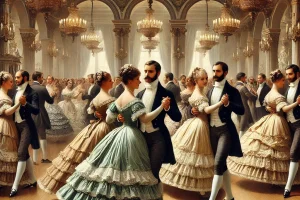
De contradanza was de eerste Europees-afgeleide dansvorm die wortel schoot in Cuba en begon te transformeren onder Afrikaanse invloed. Het is het beginpunt van de Cubaanse salondanslijn die uiteindelijk danzón, mambo en cha-cha-chá zou voortbrengen.
Lees meer >
De contradanza was de eerste Europees-afgeleide dansvorm die wortel schoot in Cuba en begon te transformeren onder Afrikaanse invloed. Het is het beginpunt van de Cubaanse salondanslijn die uiteindelijk danzón, mambo en cha-cha-chá zou voortbrengen.
Lees meer >Danzón was de eerste nationale dans van Cuba — de vorm die in de late 19e en vroege 20e eeuw de identiteit van de Cubaanse populaire muziek verenigde, en de voorloper van mambo, cha-cha-chá en uiteindelijk timba.
Lees meer >Danzón was de eerste nationale dans van Cuba — de vorm die in de late 19e en vroege 20e eeuw de identiteit van de Cubaanse populaire muziek verenigde, en de voorloper van mambo, cha-cha-chá en uiteindelijk timba.
Lees meer >Timba is the music this site is dedicated to exploring. It emerged as a distinct genre in the late 1980s and crystallized in the early 1990s — born in a moment of social crisis, built on the full accumulated history of Cuban music, and still evolving today.
Lees meer >Rumba is de meest Afrikaans-gewortelde van alle Cubaanse muziek- en dansvormen — geboren op de straten, binnenplaatsen en kades van Havana en Matanzas aan het einde van de 19e eeuw, zonder Europese instrumenten, geen salonomgeving en geen schijn van Europese fatsoenlijkheid.
Lees meer >De Cubaanse bolero is een van de grote romantische liedtradities van de wereld — langzaam, intiem en diep emotioneel. Hij is volkomen anders dan de Spaanse bolero (een snelle dans in 3/4-maat) en ontstond in Cuba als vehikel voor de meest hartstochtelijke lyrische uitdrukking van het eiland.
Lees meer >De Cubaanse bolero is een van de grote romantische liedtradities van de wereld — langzaam, intiem en diep emotioneel. Hij is volkomen anders dan de Spaanse bolero (een snelle dans in 3/4-maat) en ontstond in Cuba als vehikel voor de meest hartstochtelijke lyrische uitdrukking van het eiland.
Lees meer >De cha-cha-chá werd geboren uit een eenvoudige observatie: dansers hadden moeite om mambo te volgen. De bedenker gaf hen een ritme dat ze in hun voeten konden voelen — en het resultaat werd een van de meest gedanste muziekstijlen in de geschiedenis.
Lees meer > Cuba is the largest island in the Caribbean and the birthplace of some of the world's most influential music and dance traditions. African, Spanish, and French cultural streams collided here over centuries of colonial history, producing an extraordinary creative culture that exported itself across the globe.
Lees meer >Spain colonized Cuba from 1492 to 1898, fundamentally shaping its language, religion, harmonic music traditions, and social structure. Spanish musical culture forms one of the two primary roots — alongside African traditions — of virtually all Cuban music.
Lees meer >Egungun is de Yoruba-maskertraditie ter ere van de collectieve voorouders — de Egun, de doden die aanwezig en actief blijven in het leven van de levenden. In Cuba overleefde de Egungun-traditie binnen de bredere wereld van Santería (Regla de Ocha) en de gerelateerde Arará en Abakuá-gemeenschappen.
Lees meer >
De clave is een fundamenteel ritmisch patroon en organiserend principe in de Cubaanse muziek. Het dient zowel als muzikaal patroon als als leidend concept, diep geworteld in Afro-Cubaanse tradities.
Lees meer >
De tres is een Cubaans gitaarachtig instrument met drie paren (koorsets) snaren. Het is het bepalende melodisch-ritmische instrument van son cubano en zijn vooroudergenres.
Lees meer >De Spaanse gitaar arriveerde in Cuba met de kolonisatoren en werd het zaad van de Cubaanse muziek, vermengd met Afrikaanse ritmes. Van het inspireren van de tres tot het vormgeven van son, conjuntos en zelfs moderne timba — haar invloed loopt door elke noot van Cuba's muziekgeschiedenis.
Lees meer >De piano is het harmonisch en ritmisch hart van de Cubaanse populaire muziek. In timba is het een van de meest veeleisende en expressieve instrumenten van het ensemble.
Lees meer >In timba (het Cubaanse genre dat eind jaren 80 en 90 evolueerde uit son en salsa) is de viool geen kerninstrument, maar het verschijnt op interessante manieren:
Lees meer >De trompet staat centraal in de Cubaanse populaire muziek sinds de jaren 20, toen het de belangrijkste melodische stem werd van het son-septeto — de "zevende stem" die het ensemble transformeerde.
Lees meer >Een Cubaans populair dansmuziekgenre dat ontstond in de jaren 1980–90
- Ontstaan in de jaren 1980–90
- Beïnvloed door songo, rumba, funk, blues, jazz, pop, rock en Afro-Cubaanse ritmes.
- Bekend om complexe ritmewisselingen, agressieve baslijnen en hoge energie die dansers aanzet tot improvisatie.
Lees meer >Mambo
In Cubaanse muziek, met name in salsa en son,
verwijst het "mambo"-gedeelte doorgaans naar een krachtige, ritmisch intense instrumentale break,
die vaak repetitieve hoornlijnen, call-and-response-patronen en opbouwende energie naar het hoogtepunt van een nummer bevat.
The Casa de la Trova in Santiago de Cuba is the spiritual home of Cuban traditional music — Son, Bolero, Changüí, and Trova. Founded in 1968 on Calle Heredia in the heart of Santiago's historic center, it has been the gathering place for the city's musicians for over half a century.
Lees meer >