Europe - place
European cultural influence on Cuba came primarily through Spain (as colonial power) and France (through the Haitian migration and Caribbean trade). These influences shaped Cuban music's harmonic language, instrumentation, and dance forms.
Spain was Cuba's colonial power from 1492 until 1898. Spanish influence runs through:
French influence arrived in Cuba through two channels:
- Direct colonial presence in the Caribbean and trade
- The Haitian migration (post-1791): French colonists and Afro-Haitian workers brought French Creole culture — and the Tumba Francesa tradition — to eastern Cuba
French cultural influence is also visible in the Contradanza and Danzón, which evolved from the French contredanse via Haiti.
The European–African Synthesis
European musical forms provided the containers; African rhythm and energy filled them. The Danzón — Cuba's national dance of the late 19th century — is a perfect example: European phrase structure and ballroom deportment wrapped around African syncopation and clave feel.
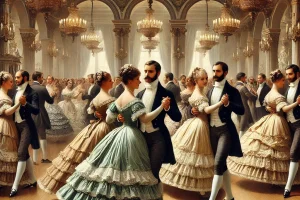
De contradanza was de eerste Europees-afgeleide dansvorm die wortel schoot in Cuba en begon te transformeren onder Afrikaanse invloed. Het is het beginpunt van de Cubaanse salondanslijn die uiteindelijk danzón, mambo en cha-cha-chá zou voortbrengen.
Lees meer >
De contradanza was de eerste Europees-afgeleide dansvorm die wortel schoot in Cuba en begon te transformeren onder Afrikaanse invloed. Het is het beginpunt van de Cubaanse salondanslijn die uiteindelijk danzón, mambo en cha-cha-chá zou voortbrengen.
Lees meer >Danzón was de eerste nationale dans van Cuba — de vorm die in de late 19e en vroege 20e eeuw de identiteit van de Cubaanse populaire muziek verenigde, en de voorloper van mambo, cha-cha-chá en uiteindelijk timba.
Lees meer >De Cubaanse bolero is een van de grote romantische liedtradities van de wereld — langzaam, intiem en diep emotioneel. Hij is volkomen anders dan de Spaanse bolero (een snelle dans in 3/4-maat) en ontstond in Cuba als vehikel voor de meest hartstochtelijke lyrische uitdrukking van het eiland.
Lees meer > Cuba is the largest island in the Caribbean and the birthplace of some of the world's most influential music and dance traditions. African, Spanish, and French cultural streams collided here over centuries of colonial history, producing an extraordinary creative culture that exported itself across the globe.
Lees meer >The Caribbean region was a crossroads of African, European, and indigenous cultures during the colonial era. The movement of enslaved people and colonizers between islands created musical and dance traditions that spread across the region and deeply influenced Cuban culture.
Lees meer > Haiti's influence on Cuban music and dance is direct, historically documented, and still alive in eastern Cuba today. After the Haitian Revolution (1791–1804), a massive migration of French colonists and Afro-Haitian workers reshaped the culture of cuba"> Santiago de Cuba and Guantánamo.
Lees meer > France's influence on Cuban music arrived primarily through the Caribbean colonial world and the Haitian migration. Its impact on Cuban dance history is substantial — the entire lineage from Contradanza to Cha-cha-chá passes through French culture.
Lees meer > Spain colonized Cuba from 1492 to 1898, fundamentally shaping its language, religion, harmonic music traditions, and social structure. Spanish musical culture forms one of the two primary roots — alongside African traditions — of virtually all Cuban music.
Lees meer >
De clave is een fundamenteel ritmisch patroon en organiserend principe in de Cubaanse muziek. Het dient zowel als muzikaal patroon als als leidend concept, diep geworteld in Afro-Cubaanse tradities.
Lees meer >De Spaanse gitaar arriveerde in Cuba met de kolonisatoren en werd het zaad van de Cubaanse muziek, vermengd met Afrikaanse ritmes. Van het inspireren van de tres tot het vormgeven van son, conjuntos en zelfs moderne timba — haar invloed loopt door elke noot van Cuba's muziekgeschiedenis.
Lees meer >De piano is het harmonisch en ritmisch hart van de Cubaanse populaire muziek. In timba is het een van de meest veeleisende en expressieve instrumenten van het ensemble.
Lees meer >In timba (het Cubaanse genre dat eind jaren 80 en 90 evolueerde uit son en salsa) is de viool geen kerninstrument, maar het verschijnt op interessante manieren:
Lees meer >De trompet staat centraal in de Cubaanse populaire muziek sinds de jaren 20, toen het de belangrijkste melodische stem werd van het son-septeto — de "zevende stem" die het ensemble transformeerde.
Lees meer >