Casa de la Música - place
Casa de la Música is the premier live music venue in Havana for contemporary Cuban dance music. With locations in Miramar and Centro Habana, it became the central stage for Timba in the 1990s and remains essential to Havana's live music scene.
During the 1990s — the Special Period following the Soviet collapse — Casa de la Música became the heartbeat of the Timba explosion. The major bands of the era performed here regularly:
- NG La Banda (El Tosco's group, pioneers of Timba)
- Bamboleo
- Charanga Habanera
- Paulito FG
- Manolín "El Médico de la Salsa"
The venue's format — live band, dancing audience, intense crowd–band interaction — was perfectly suited to Timba's call-and-response energy. The musicians would direct the dancers, the dancers would push the band, and the music escalated in real time.
Two Locations
- Miramar — the larger of the two, associated with international-level shows
- Centro Habana — more neighborhood-level, rawer energy
Significance for Dancers
For dancers studying Cuban popular dance, Casa de la Música represents the ideal context: social dancing to live Timba, where the band communicates directly with the floor and the despelote style evolved organically.
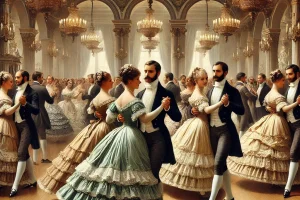
De contradanza was de eerste Europees-afgeleide dansvorm die wortel schoot in Cuba en begon te transformeren onder Afrikaanse invloed. Het is het beginpunt van de Cubaanse salondanslijn die uiteindelijk danzón, mambo en cha-cha-chá zou voortbrengen.
Lees meer >Danzón was de eerste nationale dans van Cuba — de vorm die in de late 19e en vroege 20e eeuw de identiteit van de Cubaanse populaire muziek verenigde, en de voorloper van mambo, cha-cha-chá en uiteindelijk timba.
Lees meer > Timba is the music this site is dedicated to exploring. It emerged as a distinct genre in the late 1980s and crystallized in the early 1990s — born in a moment of social crisis, built on the full accumulated history of Cuban music, and still evolving today.
Lees meer > Timba is the music this site is dedicated to exploring. It emerged as a distinct genre in the late 1980s and crystallized in the early 1990s — born in a moment of social crisis, built on the full accumulated history of Cuban music, and still evolving today.
Lees meer >Rumba is de meest Afrikaans-gewortelde van alle Cubaanse muziek- en dansvormen — geboren op de straten, binnenplaatsen en kades van Havana en Matanzas aan het einde van de 19e eeuw, zonder Europese instrumenten, geen salonomgeving en geen schijn van Europese fatsoenlijkheid.
Lees meer > Despelote is de meest explosieve individuele dansstijl in timba — een totale lichamelijke loslating van energie die plaatsvindt tijdens de hoog-intensieve bomba-secties van een timba-nummer.
Lees meer >Een Cubaans populair dansmuziekgenre dat ontstond in de jaren 1980–90
- Ontstaan in de jaren 1980–90
- Beïnvloed door songo, rumba, funk, blues, jazz, pop, rock en Afro-Cubaanse ritmes.
- Bekend om complexe ritmewisselingen, agressieve baslijnen en hoge energie die dansers aanzet tot improvisatie.
Lees meer >